

17 Sep, 2026
Shopify vs WooCommerce vs Custom E-commerce
#BusinessTechnology
#SalesAutomation
#GrowthStrategy
#CRMSoftware
Post By : Ocean Infotech
Published : 04-06-2026
1. Analytical CRM
★ In today’s competitive business environment, customer experience plays a major role in business success.
CRM (Customer Relationship Management) helps businesses manage customer interactions, improve communication, increase sales, and build long-term customer loyalty.
★ A well-implemented CRM system enables organizations to streamline operations, strengthen customer relationships, and drive sustainable business growth.
2. Collaborative CRM
★ Analytical CRM
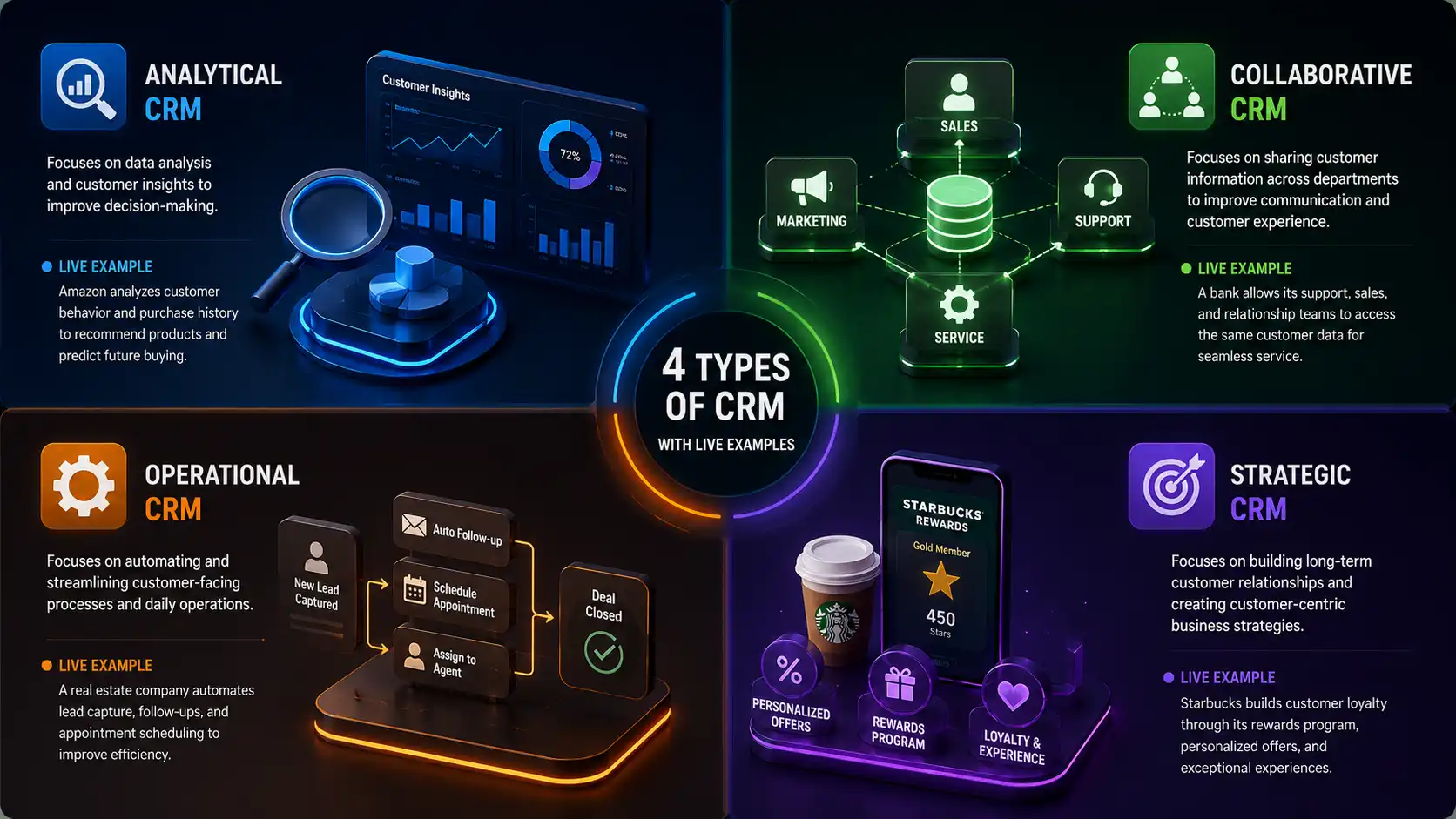
Analytical CRM focuses on collecting and analyzing customer data to understand customer behavior and preferences.
★ Key Features:
● Customer data analysis
● Customer segmentation
● Sales forecasting
● Predictive analytics
★ Benefits:
● Better customer understanding
● Improved marketing strategies
● Smarter business decisions
★ Example:
An e-commerce company analyzes purchase history to recommend personalized products.
3. Operational CRM
★ Collaborative CRM
Collaborative CRM improves communication between departments such as sales, marketing, and customer support.
★ Key Features:
● Shared customer database
● Cross-department collaboration
● Real-time information sharing
★ Benefits:
● Consistent customer service
● Faster issue resolution
● Better teamwork
★ Example:
Support teams can access customer purchase records for faster service.
4. Strategic CRM
★ Operational CRM
Operational CRM automates daily customer-facing activities such as sales, marketing, and support.
★ Key Features:
● Lead management
● Sales pipeline tracking
● Marketing automation
● Customer service automation
★ Benefits:
● Increased productivity
● Better lead management
● Faster customer support
★ Example:
Automated follow-up emails are sent after customer inquiries.
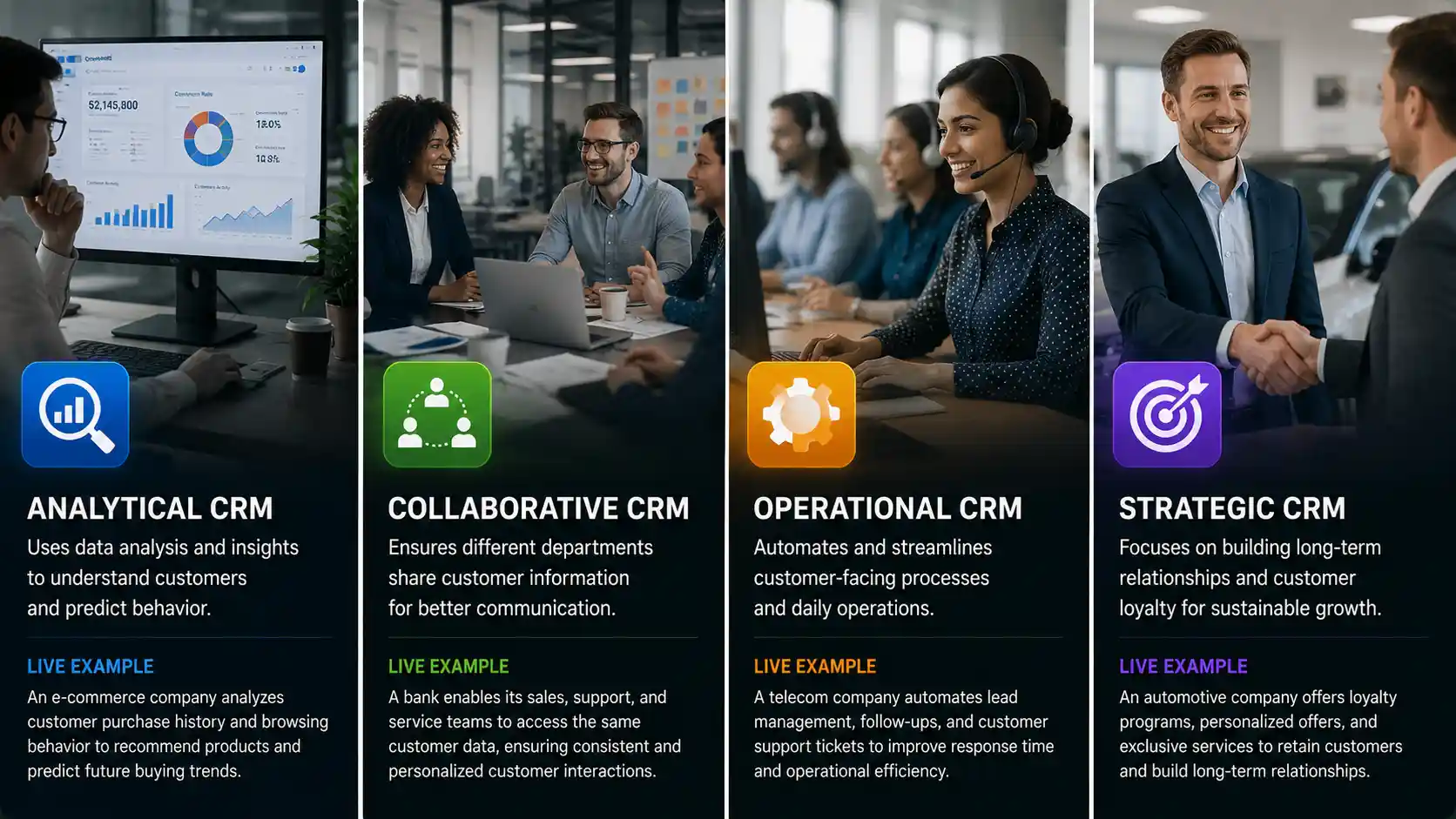
CRM Types at a Glance
★ Strategic CRM
Strategic CRM focuses on long-term customer relationships, loyalty, and retention.
★ Key Features:
● Customer retention programs
● Loyalty initiatives
● Personalized experiences
★ Benefits:
● Higher customer retention
● Increased customer lifetime value
● Sustainable business growth
★ Example:
Premium brands offer personalized after-sales services and loyalty rewards.
Conclusion
★ CRM Types Comparison Overview
● Analytical CRM – Data & Insights – Better Decision-Making
● Collaborative CRM – Communication – Improved Customer Experience
● Operational CRM – Automation – Process Efficiency
● Strategic CRM – Long-Term Relationships – Customer Loyalty
★ Each CRM type serves a unique purpose, and businesses often combine multiple CRM approaches to maximize efficiency, customer satisfaction, and long-term growth.
★ CRM is essential for modern businesses.
By combining the strengths of different CRM types, organizations can create a more customer-centric and efficient business environment.
● Analytical CRM – Better customer insights and decision-making
● Collaborative CRM – Improved communication and customer experience
● Operational CRM – Enhanced automation and process efficiency
● Strategic CRM – Stronger customer loyalty and long-term relationships
★ Together, these CRM approaches help businesses improve customer experiences, increase efficiency, strengthen loyalty, and achieve sustainable long-term growth.
Fillter
Latest News



_5.webp)


Comments