

17 Sep, 2026
Shopify vs WooCommerce vs Custom E-commerce
#CloudComputing
#BigData
#TechInnovation
#MachineLearning
Post By : Ocean Infotech
Published : 08-05-2026
Ocean Infotech
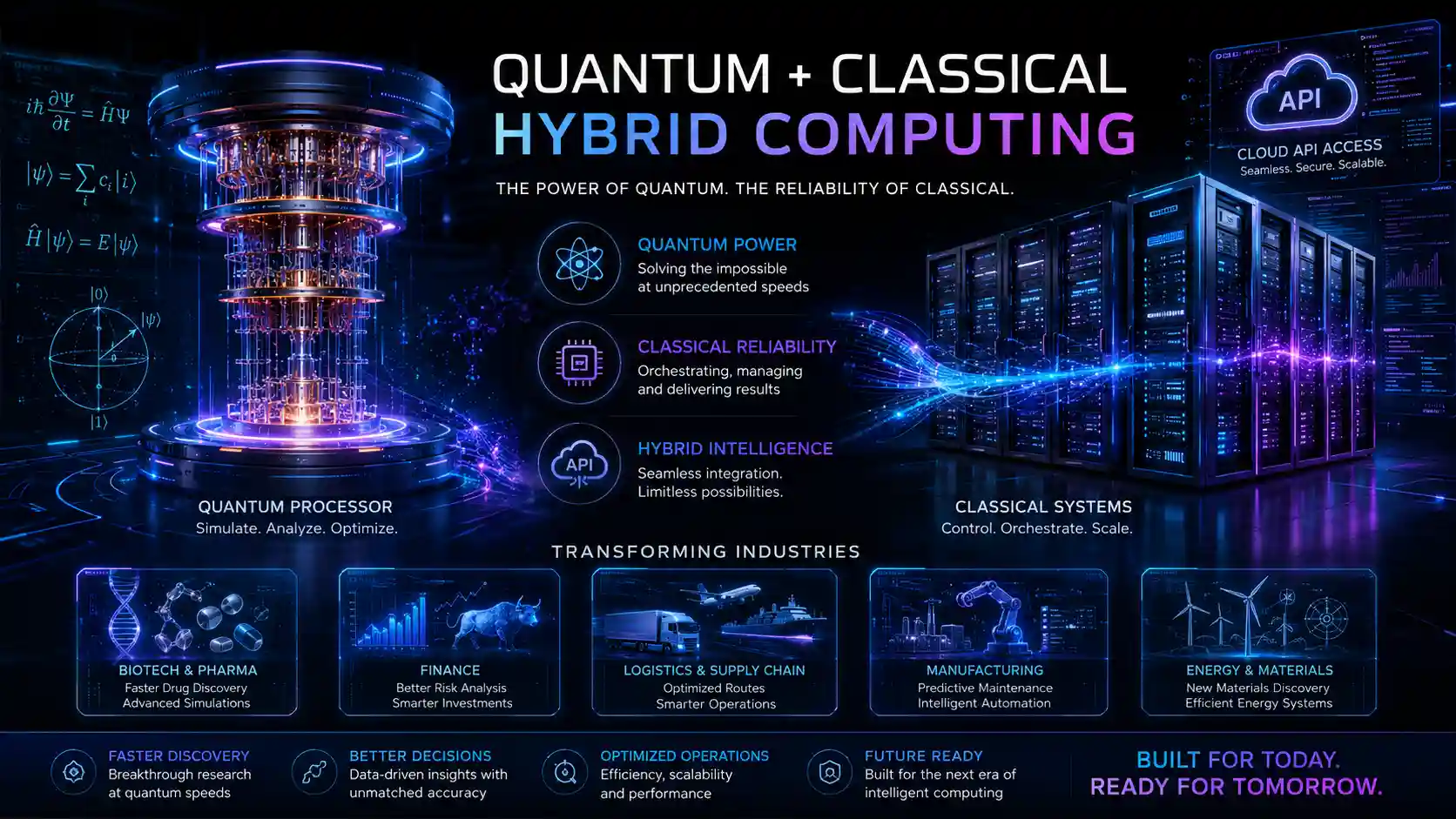
The world of computing is entering a revolutionary era where the power of quantum computing meets the stability of classical systems. This transformation is known as Quantum + Classical Hybrid Computing, and it is rapidly becoming one of the most important technological shifts shaping industries worldwide.
From faster drug discovery to advanced financial modeling and next-generation logistics optimization, hybrid computing systems are redefining how businesses solve problems that were once considered impossible.
In this blog, we will explore:
What Quantum + Classical Hybrid Computing is
Why hybrid systems are the future
Key technologies powering this shift
Real-world industry applications
Career opportunities and required skills
The future outlook of quantum hybrid architecture
Why Hybrid Computing is the Real Future of Quantum Technology ?
Quantum + Classical Hybrid Computing is a computing architecture where quantum processors and classical computers work together to solve complex problems more efficiently.
Instead of replacing traditional computers, quantum systems complement them.
How It Works
Quantum computers handle highly complex calculations, simulations, and optimization tasks.
Classical computers manage orchestration, user interfaces, data processing, storage, and operational reliability.
This hybrid model combines:
The speed and computational power of quantum systems
The stability and scalability of classical computing
The result is a powerful ecosystem capable of solving advanced scientific and industrial problems far beyond current computing limitations.
Industries Being Transformed by Hybrid Computing
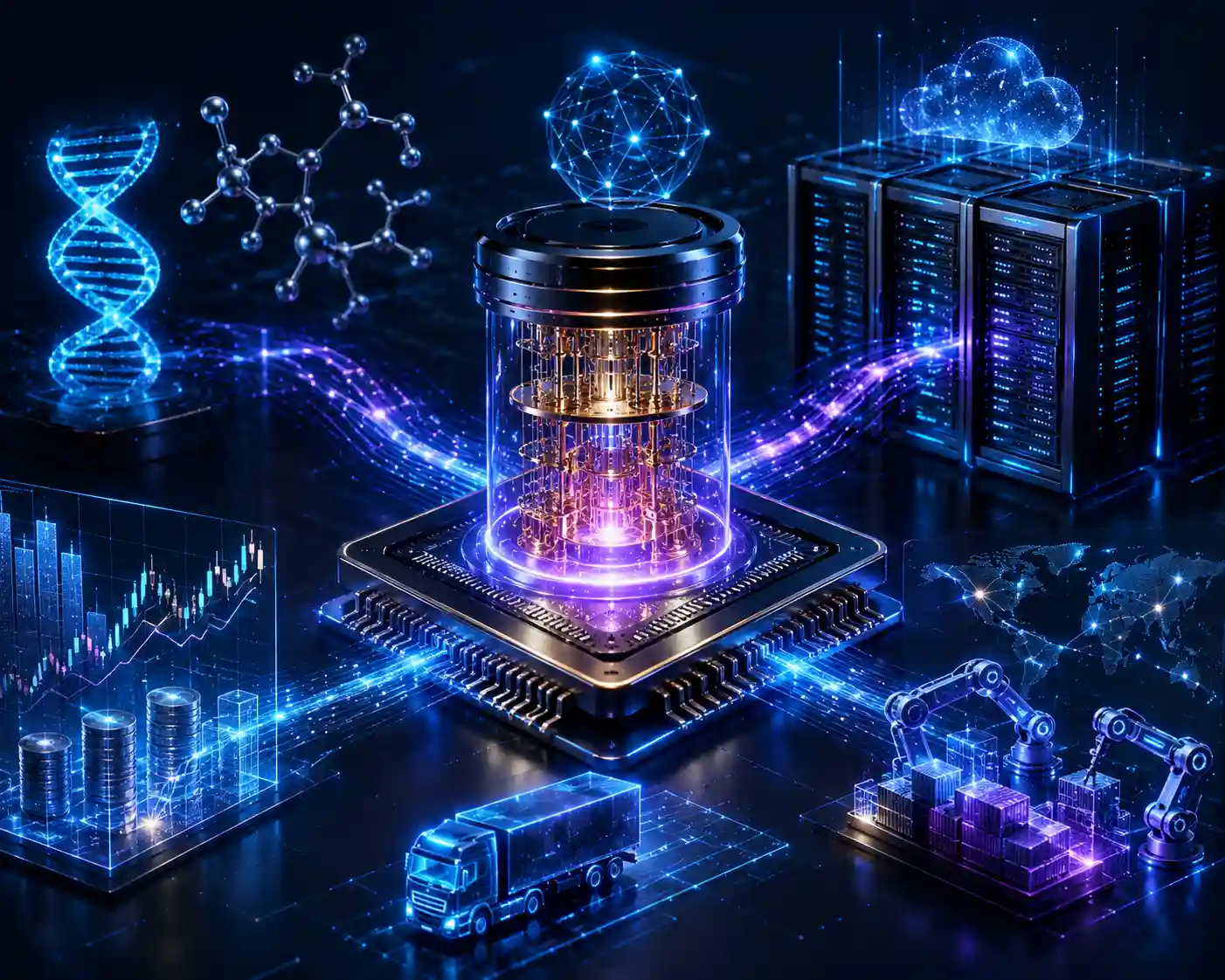
Many people believe quantum computers will fully replace traditional systems. In reality, the near future belongs to hybrid quantum-classical systems.
Pure quantum systems still face challenges such as:
Hardware instability
Error correction limitations
High infrastructure costs
Limited scalability
Hybrid computing solves these issues by allowing classical systems to control and support quantum workloads.
This approach makes quantum technology:
More practical
More accessible
More scalable for businesses
Easier to integrate into existing infrastructure
As a result, major technology companies and research institutions are investing heavily in hybrid computing platforms.
Biotech and Pharmaceutical Research
One of the biggest impacts of quantum hybrid systems is in healthcare and biotechnology.
Faster Drug Discovery
Quantum simulations help researchers:
Analyze molecular interactions
Discover new compounds
Predict protein structures
Reduce research timelines dramatically
Drug development that once took years may soon take months.
Personalized Medicine
Hybrid systems can analyze massive genetic datasets to create personalized treatment strategies with greater precision.
Finance and Risk Analysis
Financial institutions require massive computational power for:
Portfolio optimization
Market forecasting
Fraud detection
Risk management
Quantum hybrid systems can process complex probabilistic models far faster than classical systems alone.
Benefits for Finance
Better risk analysis
Smarter investment strategies
Faster scenario simulations
Improved cybersecurity modeling
Banks and hedge funds are already exploring hybrid quantum solutions to gain competitive advantages.
Logistics and Supply Chain Optimization
Supply chain management involves millions of moving variables:
Transportation routes
Warehouse optimization
Inventory balancing
Fuel efficiency
Demand forecasting
Hybrid quantum systems can optimize these variables in real time.
Business Advantages
Reduced operational costs
Faster delivery systems
Better resource allocation
Improved global logistics planning
For industries dependent on large-scale distribution networks, this technology is game-changing.
Quantum Computing and Artificial Intelligence
Artificial Intelligence and quantum computing are becoming deeply interconnected.
Hybrid systems can improve:
Machine learning optimization
Neural network training
Data clustering
Pattern recognition
Predictive analytics
Quantum-enhanced AI could dramatically increase processing efficiency for future intelligent systems.
This convergence is expected to drive the next wave of advanced automation and smart decision-making technologies.
Fillter
Latest News



_5.webp)


Comments