

17 Sep, 2026
Shopify vs WooCommerce vs Custom E-commerce
#AttendanceManagement
#CloudHRMS
#CloudHRMS
#BusinessEfficiency
Post By : Ocean Infotech
Published : 17-07-2026
What Is an HRMS?
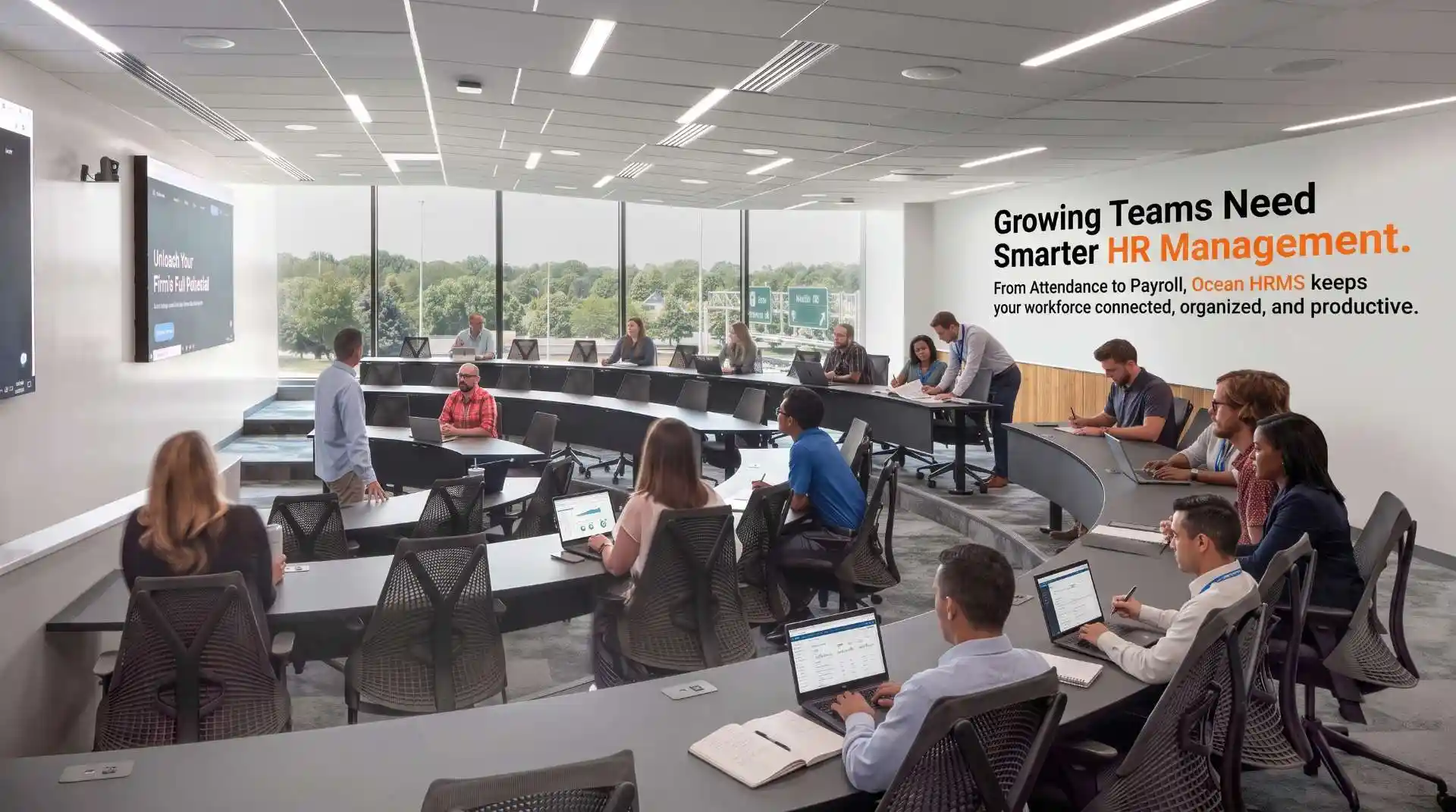
★ Why Every Growing Business Needs an HRMS: When businesses think about digital transformation, ERP and CRM systems often receive the most attention. While these solutions offer significant benefits, they are not always the first priority for every organization. One area that every growing business must manage efficiently, however, is its workforce.
Common Workforce Management Challenges Include:
✔ Manual Attendance Tracking
✔ Leave & Holiday Management
✔ Payroll Processing Errors
✔ Employee Record Management
✔ Shift & Schedule Coordination
✔ Performance Monitoring
✔ Time-Consuming HR Processes
✔ Increased Risk of Human Errors
★ The Business Advantage: An HRMS is no longer a solution only for large enterprises. It has become one of the most practical and cost-effective tools for businesses of all sizes. By automating routine HR tasks, improving data accuracy, and streamlining workforce management, an HRMS helps organizations save time, enhance employee productivity, and prepare for future growth—even without implementing a full ERP or CRM system.
You May Not Need an ERP Yet, But You Definitely Need an HRMS
★ What Is a Human Resource Management System (HRMS)? A Human Resource Management System (HRMS) is software designed to simplify and automate everyday HR operations. Instead of managing employee information through spreadsheets, paper records, and multiple disconnected applications, an HRMS centralizes all workforce data into a single, secure platform.
Core HRMS Features Include:
✔ Employee Records Management
✔ Attendance & Time Tracking
✔ Leave & Holiday Management
✔ Payroll Processing
✔ Shift & Schedule Management
✔ Employee Document Management
✔ Salary Slips & Payroll History
✔ Performance Tracking & Appraisals
✔ HR Reports & Workforce Analytics
★ The Business Advantage: By automating routine HR processes and maintaining accurate employee data in one place, an HRMS reduces administrative workload, minimizes manual errors, improves compliance, and allows HR teams to focus on employee engagement, talent development, and overall business growth.
The Hidden Cost of Manual HR Management
★ Why an HRMS Matters Before ERP or CRM: Not every business needs production planning, inventory management, procurement, or advanced customer relationship management from the beginning. However, every business with employees must manage its workforce efficiently. HR operations are a daily necessity, regardless of your industry or business size.
Examples of Business Needs:
✔ Service companies may not require inventory management.
✔ Consultancy firms may not need manufacturing modules.
✔ Startups may not yet require advanced CRM automation.
✔ Every business must manage employee attendance.
✔ Leave requests require timely approvals.
✔ Payroll must be processed accurately every month.
✔ Employee documents need secure digital storage.
✔ Salary slips must be generated and shared regularly.
★ The Business Advantage: Since workforce management is essential for every organization, an HRMS delivers immediate value by automating routine HR tasks, improving accuracy, reducing administrative effort, and ensuring smooth day-to-day operations—even before investing in a complete ERP or CRM solution.
Attendance Management Without the Hassle

★ The Challenges of Manual HR Management: Many organizations still rely on Excel spreadsheets, WhatsApp messages, paper registers, and manual calculations to manage HR activities. Although this approach may appear cost-effective in the beginning, it often leads to inefficiencies, errors, and increased administrative workload as the business grows.
Common HR Management Challenges Include:
✔ Attendance Calculation Errors
✔ Payroll Processing Mistakes
✔ Lost or Mismanaged Employee Documents
✔ Delayed Leave Approvals
✔ Difficulty Tracking Overtime
✔ Inaccurate Working Hour Records
✔ Compliance & Regulatory Challenges
✔ Time-Consuming Monthly HR Reporting
★ The Business Impact: As the workforce expands, small manual inefficiencies quickly become costly operational problems. Automating HR processes with an HRMS reduces repetitive tasks, improves data accuracy, enhances compliance, saves valuable time, and allows HR teams to focus on strategic employee management rather than administrative work.
Simplifying Leave Management
★ Simplify Employee Attendance Management: One of the biggest daily challenges for HR departments is tracking employee attendance accurately. A modern HRMS automates attendance management by recording employee working hours in real time, eliminating manual registers and reducing human errors.
Key Attendance Management Features Include:
✔ Daily Attendance Tracking
✔ Late Arrival Monitoring
✔ Early Departure Tracking
✔ Overtime Hours Calculation
✔ Shift & Schedule Management
✔ Absent Employee Monitoring
✔ Work-from-Home Attendance Records
★ The Business Advantage: With real-time attendance visibility, managers can monitor workforce availability, make informed scheduling decisions, and improve productivity without relying on spreadsheets or manual attendance registers. Automated attendance tracking also supports accurate payroll processing and better workforce planning.
Better Employee Records in One Place
★ Streamline Leave & Holiday Management: Managing employee leave manually often leads to delays, miscommunication, and unnecessary paperwork between employees, managers, and HR teams. A modern HRMS simplifies the entire leave management process through an automated and transparent workflow.
Key Leave Management Features Include:
✔ Online Leave Applications
✔ Real-Time Leave Balance Tracking
✔ Leave Approval Status Monitoring
✔ Integrated Holiday Calendar
✔ Instant Manager Notifications
✔ One-Click Leave Approval or Rejection
✔ Automatic Leave Balance Updates
★ The Business Advantage: Automated leave management eliminates manual calculations, reduces administrative effort, and improves communication between employees and managers. With faster approvals, accurate leave records, and real-time visibility, businesses can maintain workforce productivity while ensuring a smooth and transparent HR process.
HR Insights That Help You Make Better Decisions
★ Centralized Employee Information Management: As businesses expand, managing employee records across multiple files and systems becomes increasingly challenging. A modern HRMS securely stores all employee information in one centralized platform, making HR operations more organized, efficient, and easily accessible.
Employee Records Managed by an HRMS Include:
✔ Personal Information
✔ Employment History
✔ Identity & Verification Documents
✔ Bank Account Details
✔ Educational Qualifications
✔ Professional Experience Records
✔ Employment Contracts & Agreements
✔ Performance Reviews & Appraisal History
★ The Business Advantage: With all employee information stored securely in a centralized system, HR teams can quickly access accurate records, reduce paperwork, improve data security, simplify compliance, and manage workforce information more efficiently throughout the employee lifecycle.
A Standalone HRMS Today, an ERP Tomorrow
★ Gain Actionable Insights with HR Analytics: Modern HRMS software goes beyond storing employee information by providing powerful reports and analytics. Business owners and HR managers can access real-time workforce data to monitor performance, identify trends, and make informed business decisions.
Key HR Reports & Analytics Include:
✔ Attendance Trends & Reports
✔ Employee Turnover Analysis
✔ Department-Wise Workforce Reports
✔ Leave Utilization Statistics
✔ Payroll Summaries
✔ Overtime Analysis
✔ Workforce Productivity Insights
★ The Business Advantage: With accurate, real-time HR analytics, organizations can identify workforce trends, improve resource planning, optimize employee performance, and make strategic decisions based on reliable data rather than assumptions, helping drive long-term business success.
Why Ocean HRMS Is Built for Growing Businesses
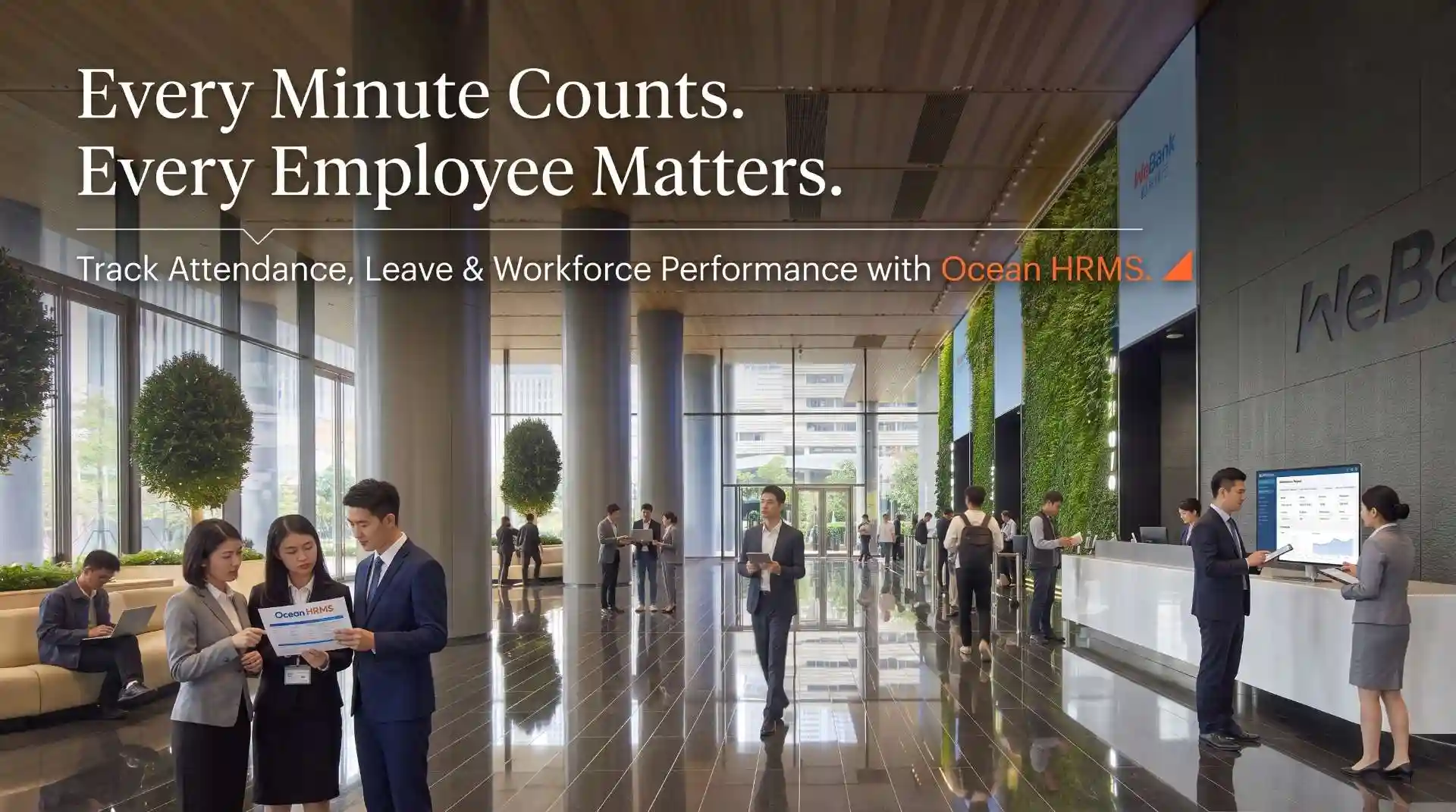
★ Build a Strong Foundation for Digital Transformation: One of the greatest advantages of implementing an HRMS is that it establishes a solid digital foundation for your business. As your organization grows, the HRMS can seamlessly integrate with additional ERP modules, allowing you to expand your digital ecosystem without disrupting daily operations.
Future ERP Integrations Include:
✔ Payroll Accounting Integration
✔ Finance & Accounting Modules
✔ Project Management Integration
✔ Production Planning
✔ Inventory Management
✔ Customer Relationship Management (CRM)
★ The Business Advantage: Starting with an HRMS enables businesses to adopt digital transformation at their own pace. As operational requirements evolve, additional ERP modules can be integrated smoothly, creating a connected business platform that improves efficiency, supports growth, and minimizes disruption to existing workflows.
Conclusion
★ Why Choose Ocean HRMS: At Ocean Infotech, we understand that every organization has unique workforce management needs. Ocean HRMS is designed to simplify daily HR operations while providing the flexibility to adapt and grow alongside your business, regardless of its size or industry.
Key Features of Ocean HRMS:
✔ Employee Management
✔ Attendance Tracking
✔ Leave Management
✔ Payroll Integration
✔ Holiday Calendar Management
✔ Shift Scheduling
✔ Role-Based Access Control
✔ Employee Self-Service Portal
✔ Salary Slip Generation
✔ HR Reports & Analytics
★ The Ocean HRMS Advantage: Whether you manage a team of 20 employees or hundreds across multiple branches, Ocean HRMS helps automate HR processes, reduce manual effort, improve data accuracy, and enhance workforce productivity. Its scalable architecture ensures your HR system grows with your business while supporting smarter, more efficient people management.
★ Conclusion: Digital transformation doesn't always begin with a large ERP implementation. For many growing businesses, the most practical and impactful first step is improving workforce management through a modern HRMS. By automating routine HR tasks such as attendance tracking, leave management, payroll processing, and employee record management, an HRMS reduces administrative effort, improves accuracy, and creates a more efficient work environment for both HR teams and employees.
★ Why Invest in an HRMS? As your workforce grows, manual HR processes become increasingly complex and time-consuming. A reliable HRMS helps businesses streamline daily operations, ensure payroll accuracy, enhance employee experience, and provide valuable workforce insights. More importantly, it establishes a strong digital foundation that supports future expansion and integrates seamlessly with ERP and other business management solutions as your organization evolves.
★ Take the Next Step: Managing people is at the heart of every successful business, and the right HRMS makes that responsibility simpler, faster, and more efficient. Investing in a smart solution like Ocean HRMS not only improves operational efficiency today but also prepares your business for long-term growth, digital transformation, and sustained success.
Fillter
Latest News


_5.webp)


Comments